

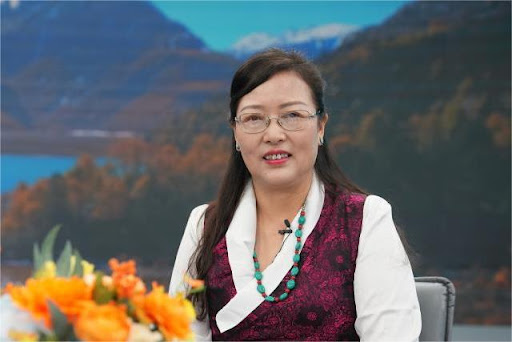
On October 3rd, in consortium with the Hamilton Lugar School, the East Asian Studies Center, and the Central Eurasian Studies Department, the IAUNRC welcomed Dr. Yudru Tsomu for a special book talk on her latest publication, Chieftains, Lamas, and Warriors: A history of Kham, 1904-1961.
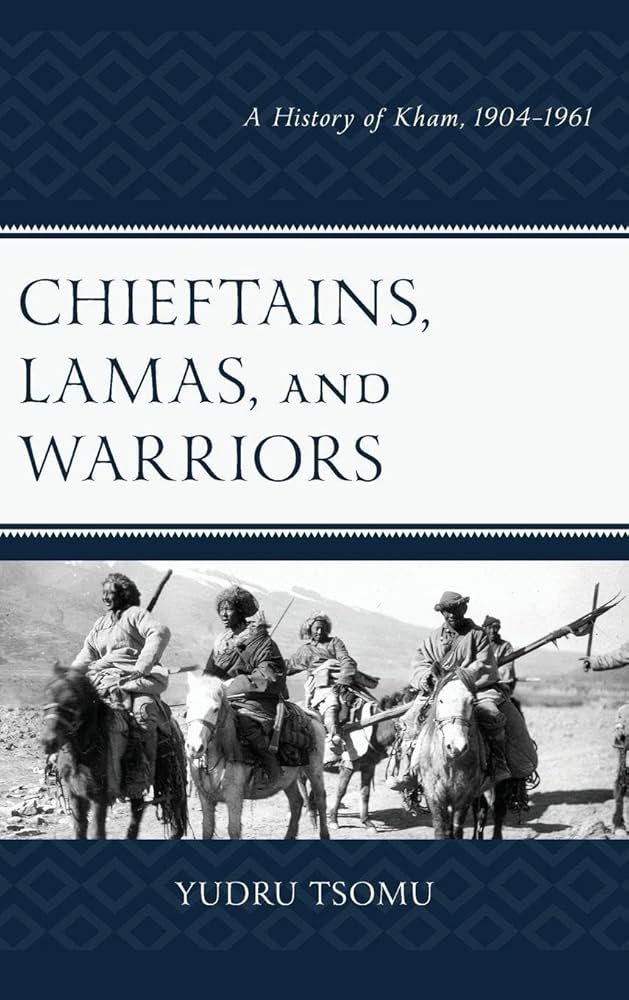
In her new book, Tsomu explores the region of Kham, situated between Central Tibet and China. She highlights Kham’s pivotal role in Sino-Tibetan relations and argues for the significance of frontier regions in shaping historical narratives and power structures. One particular example she uses to elucidate the central claims in her book is the life of Gonpo Namgyal, a Tibetan rebel leader from the Nyarong valley who waged a series of military campaigns and conflicts in the mid-19th century. Namgyal’s victories against Qing forces and subsequent capture and execution at the hands of Tibetan military personnel highlight the restive relationship between Tibetan and Qing governmental leadership at the time. Moreover, it challenges dichotomous thinking about Sino-Tibetan relations, showing that Qing authorities viewed Tibet’s western and eastern portions of the Kham region as a natural buffer zone for the southwestern frontier of Qing rule.
Tsomu also devoted time to discussing contextual research about the causes and after-effects of the Sino-Tibetan War (1929-1932), as well as themes of agency for Khampa rebels in contention over control of the Kham region in the early 20th century.
Supported by a wealth of original sources in Chinese, Tibetan, and Western languages-including previously untapped personal and archival collections in China-, this book offers a compelling reassessment of how Kham forged its own identity amidst the assimilation pressures exerted by Central Tibet and China. The event was well-attended by members of each department, including faculty emeritus and graduate students of Tibetan studies who were able to engage with Tsomu in lively discussion after the presentation.
The IAUNRC holds such opportunities for interdisciplinary discourse in high regard and is looking forward to hosting future events within the IU community.